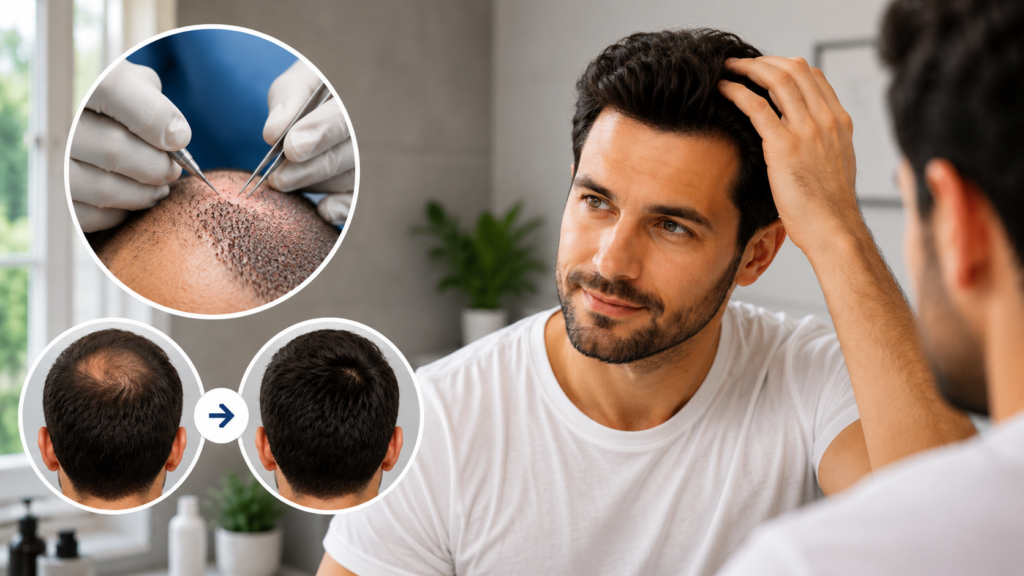
Today, the FUE hair transplant technique is widely preferred because it offers natural-looking results with minimal scarring and a quicker recovery.
Is a Hair Transplant Permanent?
Yes, in most cases.
A permanent hair transplant works because the transplanted follicles come from areas genetically resistant to pattern baldness. Once implanted successfully, these follicles usually continue growing for decades.
However, while transplanted hair is generally permanent, your existing natural hair may continue thinning due to genetics.
How Long Does a Hair Transplant Actually Last?
Every patient is different, but here’s the typical timeline.
First 2–4 Weeks
The transplanted hairs usually shed during the first few weeks. This temporary shedding, called shock loss, is a normal part of hair transplant recovery.
3–6 Months
New hair begins growing from the transplanted follicles. The hair is initially fine but gradually becomes thicker.
6–12 Months
Most patients notice significant improvements in density and coverage as the hair continues to mature.
12–18 Months
The final hair transplant results are usually visible within 12 to 18 months. At this stage, the transplanted hair grows naturally and can be cut, washed, and styled like your existing hair.
Factors That Affect Hair Transplant Longevity
Several factors influence how long your hair transplant results last.
1. Quality of the Donor Hair
Healthy donor hair improves the chances of long-lasting results.
Proper graft handling and placement play a major role in achieving a high hair transplant success rate.
3. Hair Transplant Technique
Modern FUE hair transplant procedures are designed to maximize graft survival and create natural-looking outcomes.
4. Genetics
Although transplanted follicles are resistant to hair loss, surrounding natural hair may continue thinning over time.
5. Age at the Time of Surgery
Patients with stable hair loss patterns generally achieve more predictable long-term results.
6. Lifestyle and Overall Health
A balanced diet, stress management, avoiding smoking, and following medical advice all support healthy hair restoration.
Can Transplanted Hair Fall Out Again?
Temporary shedding after surgery is completely normal. During hair transplant recovery, the transplanted hairs fall out before new growth begins.
Permanent graft loss is uncommon when the procedure is performed correctly and proper aftercare is followed.
What Happens to Your Natural Hair?
A hair transplant restores hair to bald areas but does not prevent future hair loss in untreated areas.
To help preserve your existing hair, your doctor may recommend treatments such as PRP, GFC, Exosome Therapy, or medications, depending on your individual needs.
How to Make Your Hair Transplant Last Longer
To maximize the lifespan of your permanent hair transplant: